
Urethral Sphincter Mechanism Incompetence (USMI)
What is it?
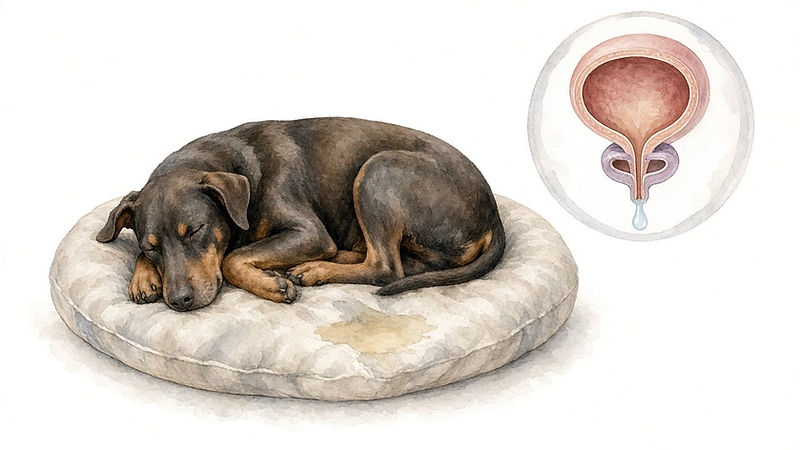
Urinary (urethral) incontinence is the involuntary leaking of urine. One of the more common causes is a urethral disorder in which the muscles that close the urethra do not contract tightly enough. This is often hormone-responsive and is the type commonly called urethral sphincter mechanism incompetence (USMI). It may affect more than 20% of spayed female dogs and up to 30% of large-breed dogs, and it is most common in middle-aged to senior, medium to large-breed females, though any dog can be affected.
What signs should I watch for?
The classic sign is a puddle or wet spot where your dog has been sleeping or resting. Some dogs dribble urine while walking or after urinating. Many seem unaware it is happening. Licking, odor, or redness around the vulva can follow.
How is it diagnosed and treated?
Your veterinarian will use the history, a physical exam, and blood and urine tests, and often X-rays or ultrasound, to rule out infections, bladder stones, nerve problems, and anatomic problems such as ectopic ureters. Cystoscopy or specialized pressure testing is sometimes needed. Treatment usually uses phenylpropanolamine (PPA), which tightens the urethral sphincter, and/or estrogen-type hormones; about 70% of incontinence cases respond well to medication alone. Other options for difficult cases include other medications, collagen injections around the urethra, and specialist surgery. Dogs on long-term medication need periodic blood and urine checks.
Can it be prevented, and what's the outlook?
- Hormone changes after spaying are thought to play a role, so ask your veterinarian about timing if you have a large-breed female.
- The outlook is generally good: most dogs are managed successfully with medication, monitoring, and more frequent trips outside.
Reviewed by the Adler Veterinary Hospital veterinary team, October 2026.
Spayed females, especially middle-aged to older and large breeds
Who's at risk:
Wet spots where the dog sleeps, dribbling urine, unaware of leaking
Main signs:
Ongoing management with your vet
Urgency:
When to call a vet right away
- Leaking that starts suddenly or gets worse
- Redness, odor or constant licking around the vulva
- Straining or not passing urine (urine retention)
Not sure whether it can wait? Call us anyway. Our team can help you decide.
Source:
Related conditions

Ectopic Ureters

Hooded Vulva

Obesity