
Inflammatory Bowel Disease and GI Lymphoma
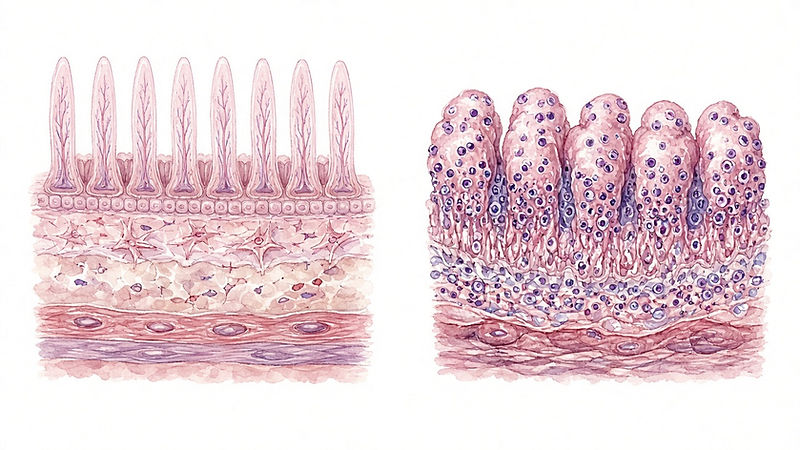
What is it?
Inflammatory bowel disease (IBD) is chronic inflammation of the intestinal lining. Small-cell GI lymphoma, a slow-growing cancer, causes very similar signs and is common in older cats. The two can be hard to tell apart.
What signs should I watch for?
Signs to watch for include chronic or intermittent vomiting, diarrhea, weight loss, changes in appetite, and lethargy.
How is it diagnosed and treated?
Diagnosis involves ruling out parasites, diet issues, and other diseases with blood work, fecal testing, and ultrasound. Intestinal biopsies are often needed to distinguish IBD from lymphoma. Treatment may include diet trials, anti-inflammatory therapy, and, for lymphoma, oral chemotherapy.
Can it be prevented, and what's the outlook?
- Many cats with IBD or low-grade lymphoma are controlled well for long periods with treatment.
- Don't ignore frequent vomiting; it isn't normal.
Reviewed by the Adler Veterinary Hospital veterinary team, October 2026.
Cats, especially older cats
Who's at risk:
Chronic vomiting, diarrhea, weight loss, appetite changes
Main signs:
Ongoing management with your vet
Urgency:
When to call a vet right away
- Vomiting that is frequent or getting worse
- Diarrhea that won't settle
- Poor appetite or weight loss
- Lethargy
- Vomiting hairballs more than once a month
Not sure whether it can wait? Call us anyway. Our team can help you decide.
Source:
Related conditions

Diabetes

Hyperthyroidism

Obesity