
Malnutrition and Obesity
What is it?
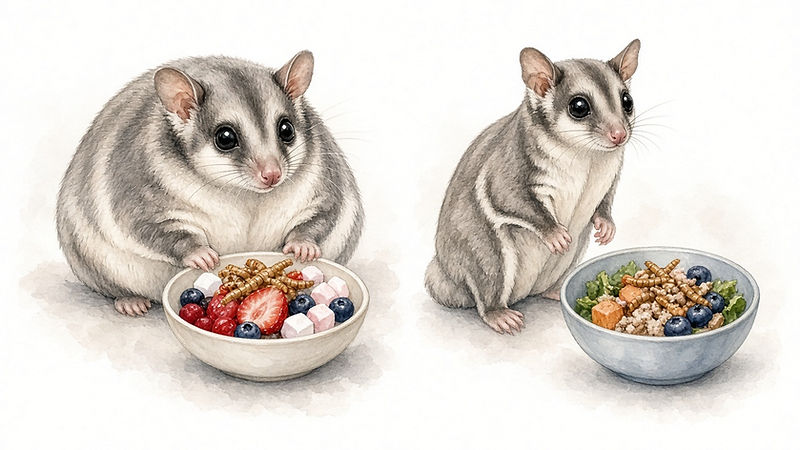
In the wild, sugar gliders eat tree sap, gum, nectar, and insects, a diet that is hard to copy at home. Many health problems in pet gliders trace back to diet. Too much fruit, sweets, or seeds can cause obesity and fatty liver, while unbalanced homemade diets can lead to protein, calcium, and vitamin deficiencies.
What signs should I watch for?
Signs to watch for include weight gain, fat pads on the belly or legs; weight loss, thin or patchy coat; low energy or less gliding; cloudy eyes or poor healing; and dental problems and loose stools.
How is it diagnosed and treated?
Your veterinarian reviews exactly what your glider eats, checks weight and body condition, and may run blood tests. Treatment is a gradual switch to a balanced diet with measured portions, treatment of any secondary problems, and more opportunities to climb and glide.
Can it be prevented, and what's the outlook?
- A veterinarian-approved diet balanced in protein, nectar or gum sources, and limited produce, with proper calcium, prevents most problems.
- Weigh your glider regularly on a gram scale.
Reviewed by the Adler Veterinary Hospital veterinary team, October 2026.
Gliders fed fruit, sweets, seeds, or unbalanced diets
Who's at risk:
Weight gain or loss, patchy coat, low energy, cloudy eyes
Main signs:
Ongoing management with your vet
Urgency:
When to call a vet right away
- Your glider is overweight or obese
- Leg or whole-body tremors
- Poor appetite
- Pain or trouble moving around
Not sure whether it can wait? Call us anyway. Our team can help you decide.
Source:
Related conditions

Giardia & GI Parasites

Hind-Limb Paralysis

Metabolic Bone Disease